
Building Beyond the Founder: Notes from the CNK and BXV Session on Family Business Continuity
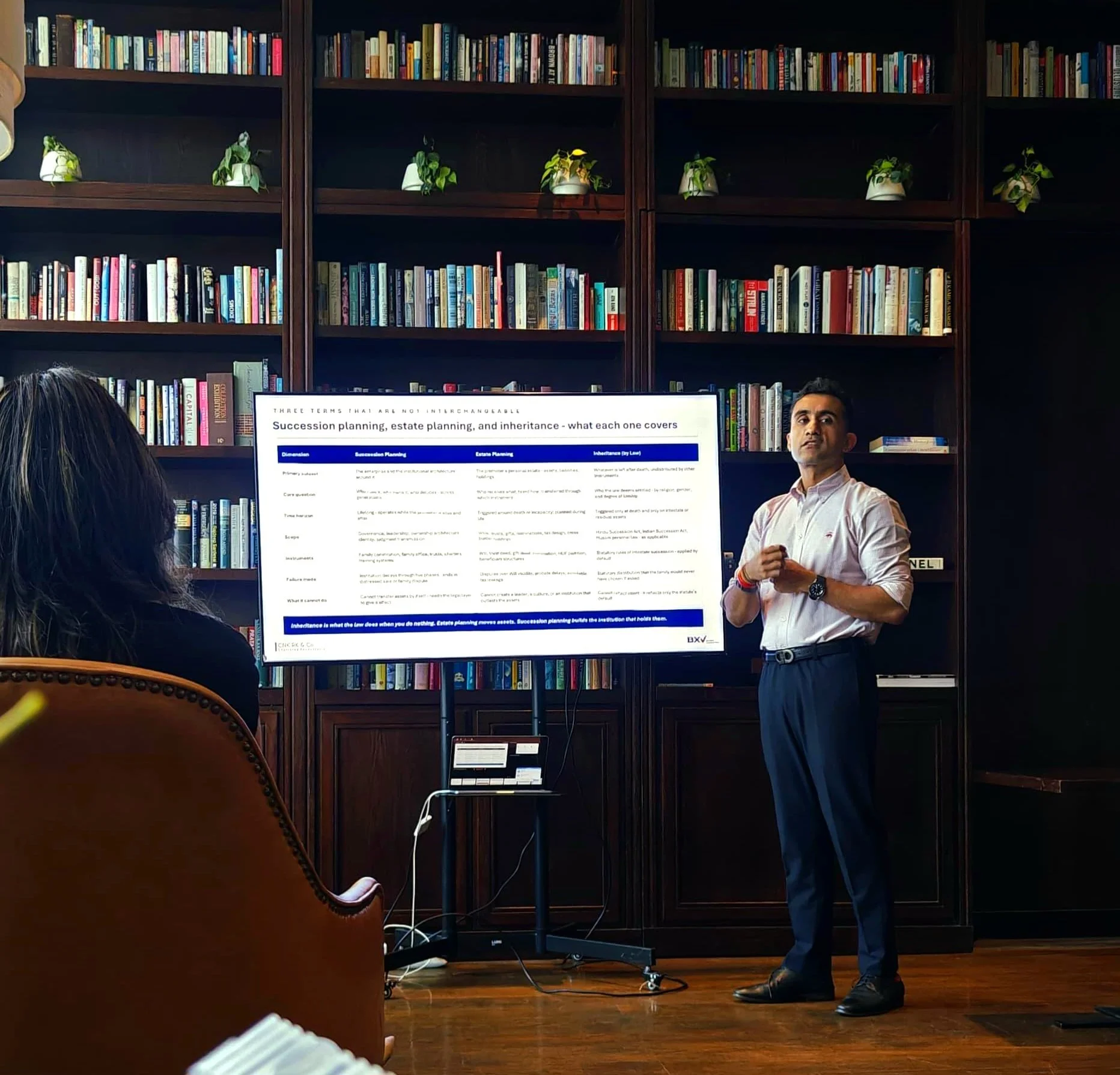
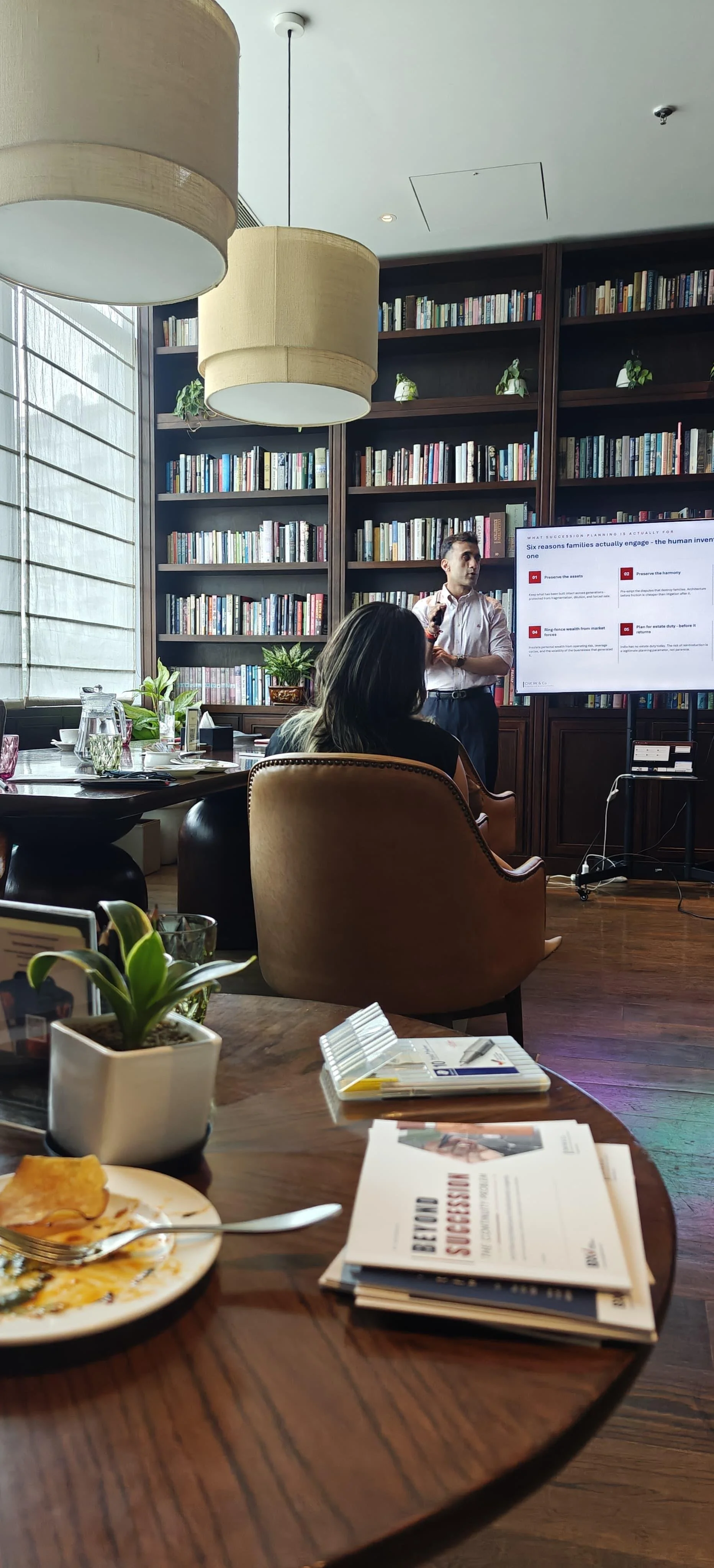
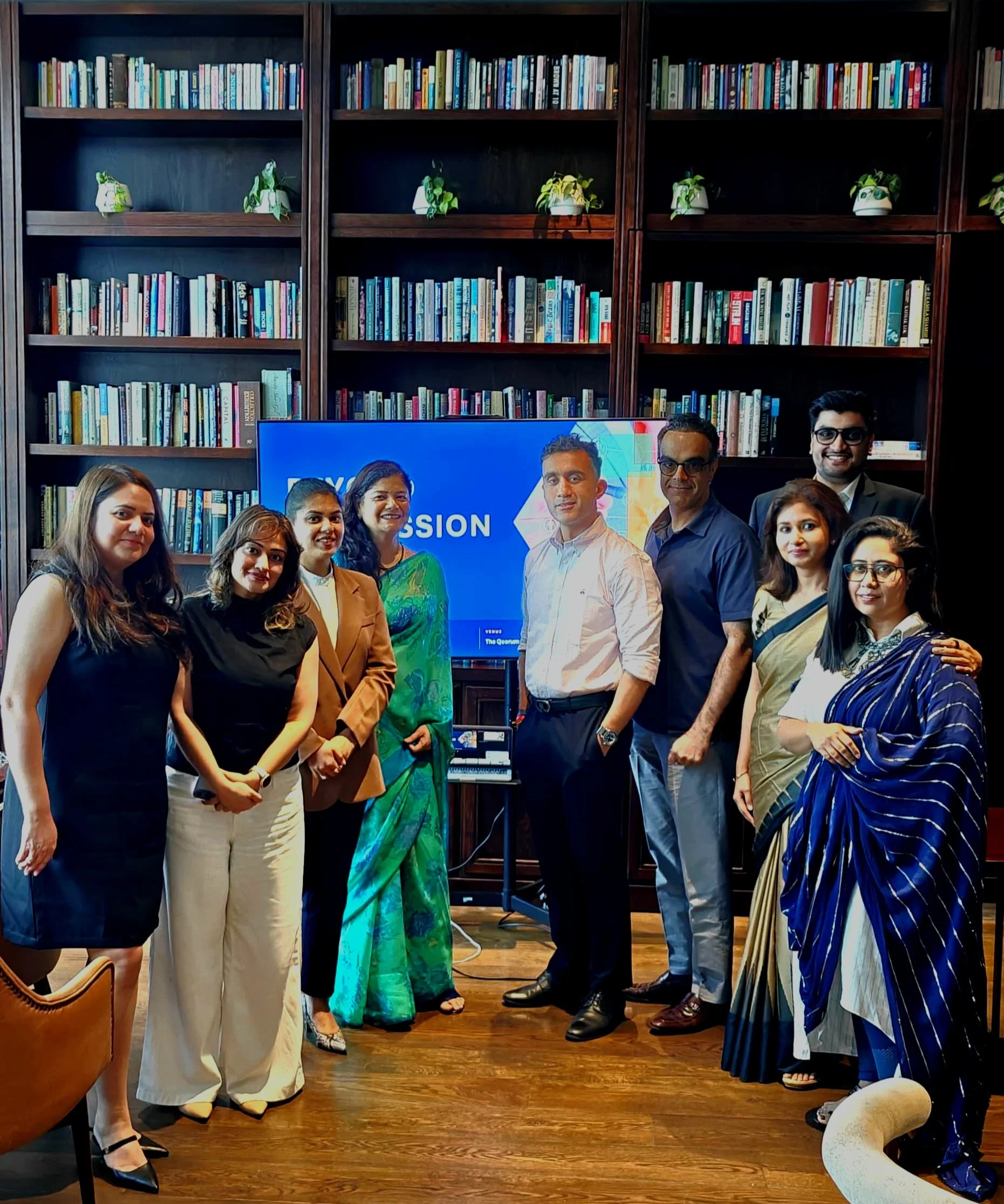
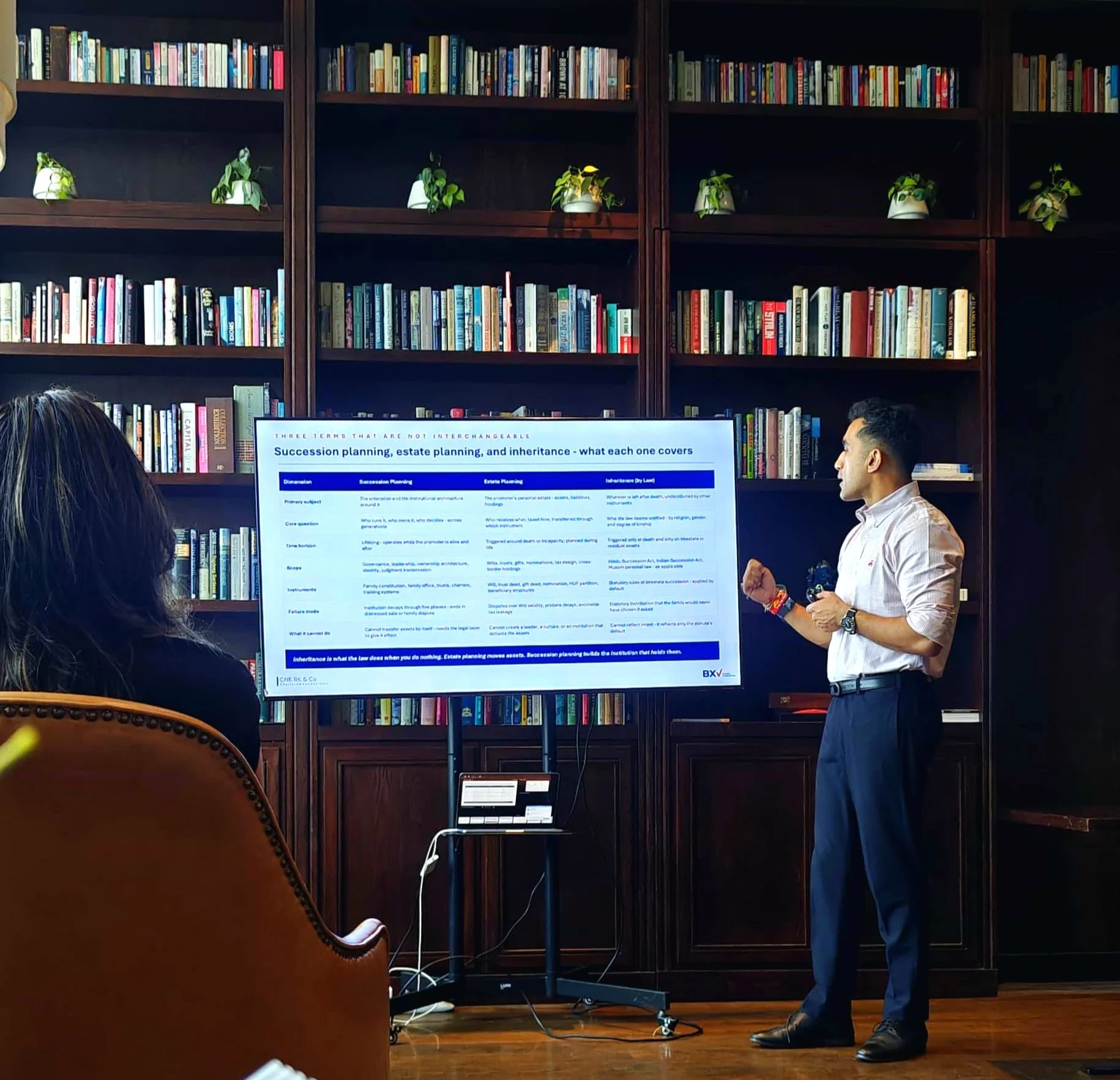
Last week, CNK RK & Co. and BXV brought together a room of founders, family business leaders, and next-generation principals for an honest conversation about what it really takes to build a business that outlasts its builder. CNK RK was represented by our Partner Pallav Pradyumn Narang and BXV was represented by Rachna Nath, CEO and Atreyi Dass, COO.
We structured the session around three questions that most founders quietly avoid until it is too late to answer them well.
Session 1. The question underneath succession
We opened with the question that sits beneath every succession conversation. When I step out of this business, what holds, and what falls?
Most succession planning concerns itself with the mechanics. Who gets which role. Who holds which shares. Who signs what. That, we argued, is the easier half of the problem. The harder half is structural. Which parts of your business quietly depend on your judgment, your relationships, your instincts, and your presence in ways that have never actually been tested? The takeaway from this session was uncomfortable but useful. Succession planning, in the conventional sense, solves the smaller problem. The larger problem is whether the institution can think, decide, and earn trust when you are not in the room.
Session 2. Hundred-year families
The second session looked at the three-generation test. The well-documented pattern where roughly seven in ten family businesses do not survive the transition to the second generation, and only a small fraction reach the third. The question we worked through was simple. What separates the families that cleared it from the families that did not?
The distinguishing factors, it turns out, are rarely about wealth or business performance. They are about governance discipline. The seriousness with which the family treats the rules of its own relationships. The clarity with which ownership, management, and family are kept separate. The willingness to professionalise before the business actually forces the issue. The takeaway was deliberately practical. Whichever generation you are in, first generation still building, second generation in transition, or third generation holding what was passed down, there is meaningful work you can begin from where you stand today.
Session 3. The architecture of continuity
The closing session moved from diagnosis to construction. What does it take to build an institution that carries your imprint and lives beyond a hundred years?
We talked through the architectural pieces. A family constitution that is more than a document on a shelf. A board that genuinely governs rather than ratifies. A values framework that survives the founder. Leadership pipelines that begin a decade before they are needed.
A significant part of this session was devoted to the tax and structuring backbone, because architecture without a sound legal and tax foundation tends not to hold. We worked through the choice between holding companies and private trusts as the apex vehicle for family wealth, and where each of them earns its place. We discussed how private trusts, when settled and drafted with care, can deliver genuine continuity across generations, ringfence personal wealth from business risk, simplify succession at the point it matters most, and address the practical realities of beneficiaries who may live in different tax jurisdictions. We touched on the tax considerations that quietly shape these decisions, capital gains treatment on transfer of assets into structures, the implications of section 56(2)(x), the treatment of distributions, the residency status of trustees and beneficiaries, and the FEMA and ODI considerations that come into play the moment a family has international footprint or non-resident members. We also discussed the role of family investment companies, the careful use of buyback and dividend policy, the design of shareholder agreements that survive the next generation, and how all of this interacts with the family constitution rather than sitting in a separate file.
The point we kept returning to was that tax and structuring are not the architecture itself, but they are the load-bearing walls. Get them wrong and the rest of what you build will not stand.
Closing note
The thread running through all three sessions was this. Institutional continuity is not an event that happens at the founder's exit. It is a discipline practised over decades, and the families who build hundred-year institutions begin that discipline early, often well before there is any visible reason to.
CNK RK & Co. and BXV will be running further sessions in this series. If you would like to join the next one, or to have a conversation about succession architecture, governance design, family constitution work, or the tax and structuring questions that sit beneath all of it, please get in touch.